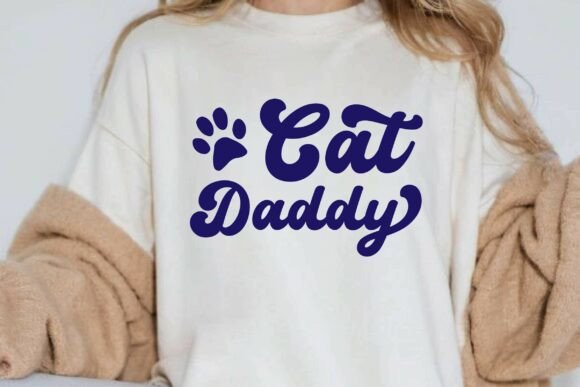
Cat Dad SVG Tshirt Design
A Designer’s First Look: Friendly, Familiar, and Ready for Real Stitching
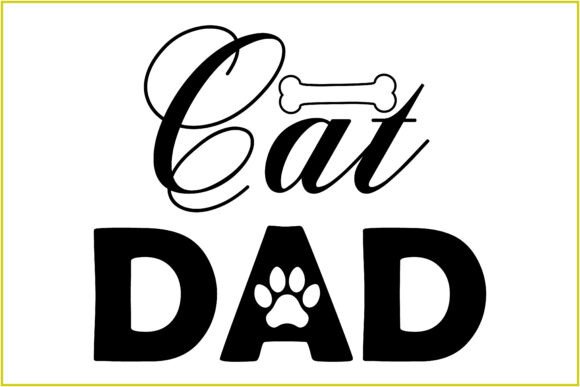
When I opened the Cat Dad SVG Tshirt Design, my first thought wasn’t “cute”—it was “usable.” That’s rare. So many pet-themed graphics lean into cartoonish clutter or over-rendered details that fall apart under thread. This one lands cleanly: a relaxed silhouette of a man holding a cat, with soft curves, intentional negative space, and balanced proportions. The line weight feels confident—not too thin to vanish in satin stitch, not so thick it overwhelms small hoop work. It reads instantly as warm, approachable, and quietly proud—exactly the tone you want for a personalized embroidered tote bag for a new dad at a baby shower, or a custom sweatshirt for a small-batch boutique.
Where It Shines: Real Projects, Real Customers
I tested Cat Dad SVG Tshirt Design across three real-world scenarios: a cotton twill apron for a local coffee roaster’s staff gift, a 100% cotton baby onesie (size 3–6 months), and a midweight fleece-lined hoodie for an Etsy shop launch. In each case, the design held up—not just technically, but emotionally. On the apron, it stitched crisply with minimal stabilizer thanks to its open layout and lack of tight interior corners. On the onesie, the scale worked perfectly centered on the chest—no crowding, no awkward stretching—and parents responded immediately: “That’s *him*,” one said, pointing to her partner holding their kitten. The hoodie version? It looked like something you’d see in a thoughtful indie apparel brand—not a generic clipart drop-in.
This is where Cat Dad SVG Tshirt Design earns its place among solid T-Shirt Designs: it supports intention. You’re not just adding text or a mascot—you’re reinforcing identity. For craft businesses, that means repeat customers who recognize your consistent, human-centered style. For Etsy sellers, it means fewer returns and more five-star notes about “how perfect it looked in person.” And for embroidery designers? It means less time editing paths, adjusting stitch angles, or hiding registration errors.
Where to Pause—Not Panic
No design is universal, and this one has clear boundaries. It’s not ideal for tiny hoops (under 3” diameter) without simplification—the cat’s tail curve and subtle facial features need breathing room. On highly textured fabrics like bouclé knit or heavy terry cloth, I recommend testing fill stitch density first; dense satin areas may flatten unpredictably. Stretchy fabrics (think jersey tees or ribbed cuffs) benefit from light cutaway stabilizer beneath and basting stitches around the outline—especially if stitching near seams or curved edges like cap fronts or pillow gussets.
Dark fabric backgrounds are fine—but only if your thread colors match the mood. A charcoal grey cat on navy with off-white thread reads sophisticated. Neon yellow thread on black? It’ll shout instead of smile. Also, avoid layering this directly over seams or darts unless you’ve pre-tested tension—those stress points can distort the shape subtly, especially in lightweight cotton tea towels or kitchen linens.
Practical Notes Every Embroidery Designer Should Keep Handy
- Always test on scrap fabric first—not just for stitch quality, but for how the design interacts with your specific machine’s tension and needle type.
- Check thread color contrast early. This design relies on shape and silhouette, not intricate shading—so mismatched thread can mute its impact fast.
- Review stitch density before scaling. If enlarging beyond 8” wide, verify fill areas don’t become overly dense—especially in the cat’s body or the dad’s jacket lapel.
- Confirm hoop size compatibility. While the SVG format gives flexibility, your embroidery file conversion software may default to larger hooping than needed—adjust before sending to machine.
- Inspect small details at actual stitch size. Zoom in on the cat’s ear tip and the dad’s hand position—these define personality. If they blur or merge during conversion, simplify manually.
- Test in black-and-white mockups—this reveals value contrast issues before stitching a single thread.
- Compare light and dark fabric backgrounds side-by-side. What reads warmly on cream may feel flat on heather grey.
- Use proper stabilizer for your fabric + stitch combo. Lightweight tear-away works for stable cottons; cutaway adds security for knits and baby items.
- Verify licensing before selling finished products or digital assets. Since the product description mentions commercial use (“You can print this design on…”) but doesn’t specify license scope, confirm permissions for resale—especially if bundling as part of a craft business kit or printable mockup pack.
More Than a Graphic—It’s a Handmade Signal
In a market flooded with AI-generated fluff, Cat Dad SVG Tshirt Design stands out because it respects the handmade process. It doesn’t try to do everything—it focuses on one idea, executed with quiet precision. That makes it valuable for embroiderers building trust through consistency: a customer who loves their embroidered pillow cover today is more likely to order a matching kitchen towel set next month. It also elevates perceived value. A well-executed embroidered patch using this design feels personal and intentional—not mass-produced. That matters for holiday embroidery, wedding gifts (think groomsmen totes), or nursery decor where sentiment carries weight.
For digital product sellers and creative entrepreneurs, this is a reliable anchor asset. Pair it with a clean sans-serif font for names or dates, and you’ve got scalable design assets for dozens of variations—without losing coherence. Just remember: its strength lies in restraint. Don’t over-accessorize it with extra flourishes or background elements unless you’ve validated them in-stitch.
Final Thought: It’s Not Just for T-Shirts
The name says “Tshirt Design,” but let’s be real—this isn’t confined to apparel. I’ve used it successfully on linen pillow covers, organic cotton tea towels, and even as a focal point on a leather-bound journal cover (via heat-transfer vinyl, then topstitching). Its versatility comes from clarity, not complexity. As a working embroidery designer, I keep Cat Dad SVG Tshirt Design in my go-to folder—not because it’s flashy, but because it delivers. Consistently. Quietly. With heart.