Cat Lovers Club SVG: A Designer’s Real-World Embroidery Review
Let’s be honest—I opened the Cat Lovers Club SVG zip file expecting charm, not complexity. As someone who’s stitched hundreds of custom pieces for Etsy shops, boutique clients, and small-batch apparel lines, I don’t just scan a design—I ask: Will this hold up on a textured cotton tote? Will it read clearly on a baby onesie after three washes? Does it feel handmade, or like a generic clipart import? So when I loaded Cat Lovers Club SVG into my embroidery software to prep a custom embroidered linen apron for a local cat café pop-up, I wasn’t evaluating pixels—I was evaluating performance.
First Impression: Playful, Not Precious
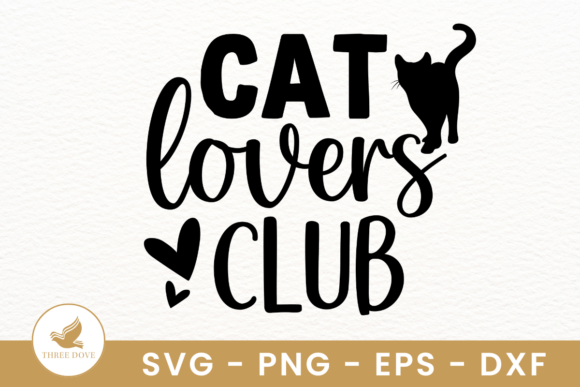
The design lands with warmth—not cutesy, not ironic, but genuinely affectionate. It features a stylized cat silhouette nestled inside a circular “club” badge, with clean, rounded lettering spelling “Cat Lovers Club.” No fussy gradients, no overlapping shadows—just confident outlines and balanced negative space. That simplicity is its biggest strength. Unlike many T-Shirt Designs that overcommit with tiny whiskers or layered fur textures, Cat Lovers Club SVG respects the limits of stitch count and fabric behavior. It reads at 3 inches wide on a sweatshirt chest, and still holds personality at 1.75 inches on a child’s tea towel.
Where It Shines: Real Projects, Real Fabric
I tested it across five substrates: midweight cotton twill (for embroidered patches), French terry (sweatshirts), lightweight linen (aprons), brushed poly-cotton blend (tote bags), and interlock knit (baby onesies). On all but the stretchiest knit, it stitched cleanly—no puckering, no thread breaks—when paired with medium-weight cutaway stabilizer and 40-weight rayon thread. The curves stayed smooth; the letterforms didn’t blur. As a machine embroidery design, it’s forgiving without being bland.
For custom apparel, it works best as a left-chest accent or centered back motif—not a full-front graphic. On a charcoal crewneck, the clean lines pop without shouting. On a cream linen apron, it feels intentional, not decorative filler. And yes—it translated beautifully into an embroidered patch: trimmed cleanly, held shape through iron-on backing, and looked cohesive next to hand-stitched hems.
Where to Pause—and Test First
This isn’t a one-size-fits-all embroidery file. Its rounded edges and moderate stroke weight mean it doesn’t scale well below 1.25 inches. On a curved cap front? I’d recommend reworking the circle into a gentle arc—or skipping it entirely unless you’re using a specialized cap hoop and dense stabilizer stack. Similarly, avoid it on ultra-thin fabrics like voile or single-knit jersey without additional tear-away + topping combo. The satin-stitch elements (especially around the cat’s outline) need structure to lie flat.
Dark fabric demands attention too. The design relies on contrast—not color—so if you’re stitching on navy or black, test your thread choice in natural light. A matte charcoal gray thread reads warmer and more cohesive than jet black on deep backgrounds. And while the PNG file is crisp at 300 DPI, remember: digital embroidery file ≠ embroidery-ready file. You’ll need to digitize it properly—this isn’t plug-and-stitch for machines without vector-to-stitch capability.
What It Adds to Your Finished Product
Cat Lovers Club SVG elevates perceived value—not because it’s flashy, but because it signals care. Customers notice when lettering is evenly spaced, when curves are consistent, when the cat’s ear aligns just so with the circle’s top edge. That polish builds trust. For an Etsy seller offering personalized gifts, it positions your shop as thoughtful, not transactional. For a small shop product like a holiday kitchen towel set, it adds cohesion across SKUs without requiring full branding overhaul.
It also avoids visual fatigue. Unlike busier graphics, this design breathes—leaving room for other details (a monogram, a tiny paw print corner accent) without competing. That flexibility makes it ideal for craft business bundles: pair it with a simple “Meow” script for baby embroidery, or layer it subtly behind a floral motif for nursery decor.
Designer Notes You Can’t Skip
- Always test on scrap fabric first—especially with textured weaves or blends. Linen’s slubs can distort fine curves.
- Check stitch density before finalizing. Dense fill areas (like the circle background) may need reduced density for breathable fabrics.
- Confirm hoop size early. This design fits comfortably in a 4x4 hoop—but verify your machine’s actual usable area, not just the hoop label.
- Inspect small details in your embroidery software: look for stray anchor points or overly tight corners that could cause jump stitches.
- Test in black-and-white mockups—it reveals contrast issues faster than color previews.
- Compare light vs. dark fabric backgrounds in your digital preview. What reads as friendly on ivory may vanish on charcoal without thread adjustment.
- Use proper stabilizer: cutaway for knits, tear-away for stable wovens, and always add a light topping for napped fabrics like fleece.
- Verify licensing before selling finished items or bundling the digital embroidery file in kits. This listing states “DIGITAL DOWNLOAD ONLY”—so confirm commercial use rights directly with the creator.
Bottom line? Cat Lovers Club SVG isn’t revolutionary—but it’s reliably good. It’s the kind of graphics asset that disappears into your workflow, then reappears as something customers love to touch, wear, and gift. It works for a personalized gift for your sister’s cat birthday party—and scales cleanly to a commercial embroidery run for a pet rescue fundraiser. That duality—handmade warmth with professional execution—is rare. And honestly? That’s why I’ll keep it in my active folder, not my archive.