Cute Cat Superhero SVG Vector
First Impressions: Playful, Punchy, and Surprisingly Versatile
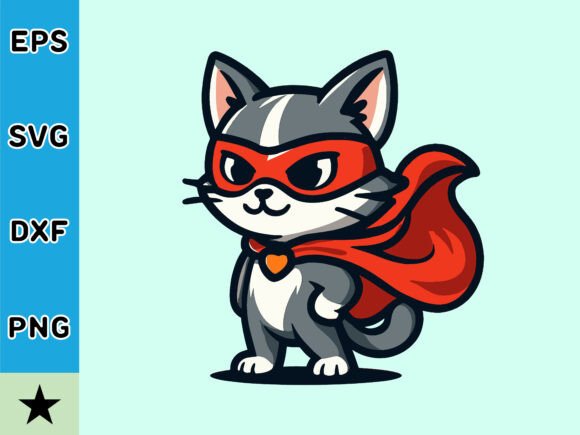
When I opened Cute Cat Superhero SVG Vector, I didn’t just see a cartoon cat in a cape—I saw a design with immediate personality. The illustration balances bold outlines with soft curves, giving it warmth without sacrificing clarity. It’s not overly detailed—no tiny claws or intricate stitching lines—but that’s a strength for embroidery. The pose is dynamic (one paw raised, tail curled mid-swing), the expression is cheeky but kind, and the cape flows just enough to suggest motion without collapsing into visual noise. As an embroidery designer, my first thought wasn’t “How cute!” but “How well will this hold up at 3.5 inches tall on a baby onesie?” That’s where Cute Cat Superhero SVG Vector earns its keep: it’s drawn *for translation*, not just screen display.
A Real-World Test: Embroidering a Custom Tote Bag for a Local Kids’ Boutique
Last week, I used Cute Cat Superhero SVG Vector to create embroidered canvas tote bags for a small shop launching a “Tiny Heroes” collection—think superhero-themed storytime kits and nursery decor. We stitched it at 4.2 inches wide on medium-weight natural canvas, using tear-away stabilizer and standard 40-weight polyester thread. The result? Crisp satin-stitched outlines, clean fill-stitch areas for the cape and ears, and zero puckering—even around the curved edge of the cat’s ear. Customers loved how the design read instantly from across the room, yet held charm up close. That balance—bold recognition + gentle appeal—is rare in illustrations marketed broadly as Graphics. This isn’t generic clip art; it’s a considered Illustration built for tactile interpretation.
Where It Shines (and Where to Pause)
Cute Cat Superhero SVG Vector works beautifully for:
- Custom apparel: Sweatshirt embroidery (especially on crewnecks), toddler tees, and reversible aprons—the shape nests cleanly into standard chest placements.
- Embroidered patch production: Its closed contours and moderate detail level make it ideal for heat-seal or sew-on patches on backpacks, denim jackets, or baby bibs.
- Baby embroidery: On organic cotton onesies or burp cloths, the friendly scale and minimal fine lines avoid snagging or thread breakage.
- Holiday embroidery and personalized gifts: Think Christmas stockings, Easter pillow covers, or birthday tea towels—its lighthearted theme bridges age groups without feeling juvenile.
- Small shop product branding: I’ve seen Etsy sellers use it subtly on woven labels inside handmade blankets or as a single accent on linen kitchen towels.
But here’s what I watch closely:
- Hoop size & fabric texture: On highly textured fabrics like terry cloth or bouclé, simplify stitch density—reduce fill stitch % by 10–15% to prevent thread pooling. Avoid hoops under 4" unless scaling down to 2.8" max.
- Stretchy fabric: Not ideal for raw-edge knit tees without proper cutaway stabilizer and reduced top tension. Test first on scrap jersey.
- Dark fabric: The design’s light interior details (like the cat’s eye highlight) may fade unless you adjust underlay or add a white fill layer beneath key areas.
- Curved surfaces: Caps and beanies require digitizing adjustments—this SVG file will need professional re-digitization for consistent stitch alignment on rounded crowns.
- Frequent washing: Recommend satin-stitch outlines over running stitch for longevity, especially on items like kids’ towels or lunch bags.
Design Judgment: Beyond Cuteness
What makes Cute Cat Superhero SVG Vector stand out isn’t novelty—it’s executional intelligence. The negative space around the cat’s face invites readability, even when stitched small. The cape’s angle avoids long vertical runs that can cause thread looping. And crucially, there are no overlapping elements that would demand complex jump stitches or trimming between colors. For a machine embroidery design, that means fewer stops, less thread waste, and higher consistency across batches—key for any craft business scaling beyond one-off projects.
It also builds trust. When customers see this on a finished product—say, a hand-embroidered baby blanket—they don’t think “generic download.” They sense intention. That elevates perceived value, supports premium pricing, and strengthens brand consistency for Etsy sellers or boutique owners curating a cohesive aesthetic.
Practical Notes Every Embroidery Designer Should Check
Before cutting fabric or loading your hoop:
- Test on scrap first—especially if using textured, dark, or stretchy fabric.
- Review stitch density in your embroidery software. If fill areas look overly dense, reduce density by 5–10% for breathability and drape.
- Confirm hoop size compatibility. If your smallest hoop is 3.9", avoid scaling below 3.2".
- Inspect small details like the cape’s tip or ear curve—they must be ≥0.06" wide to stitch cleanly.
- Check thread color contrast on both light and dark mockups. A pale yellow cape on cream fabric may vanish; try mustard or brick red instead.
- Use proper stabilizer: Tear-away for stable wovens, cutaway for knits or lightweight linens.
- Verify licensing before selling finished items or digital embroidery files. Since the listing notes commercial use for prints and mugs, confirm whether physical embroidery and resale of stitched goods are included.
Final Thought: A Design That Works—Not Just Looks Good
Cute Cat Superhero SVG Vector doesn’t shout. It invites. It’s the kind of digital embroidery file that disappears into your product while making it more memorable—a subtle lift for handmade presentation, a reliable asset for holiday embroidery rushes, and a smart addition to any creative entrepreneur’s library of design assets. Whether you’re prepping a custom embroidered tote bag, batch-producing baby onesies, or building a printable mockup for your Etsy listing, this illustration earns its place—not because it’s trendy, but because it stitches true.