Sitting Cat Minimal SVG Design
First Impressions: Quiet Charm, Not Cluttered Cuteness
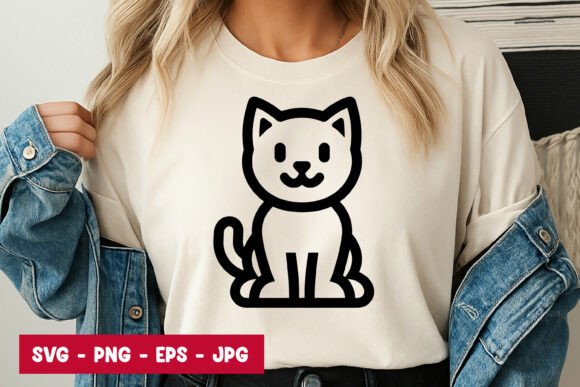
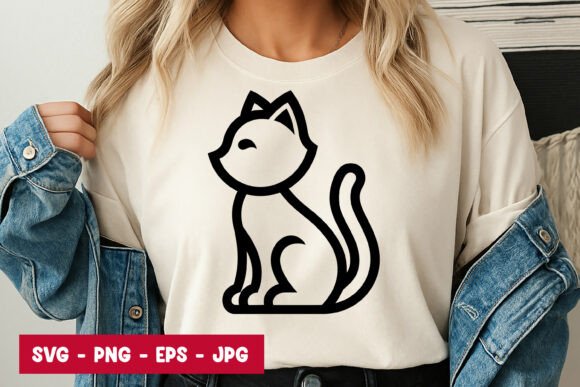
When I opened Sitting Cat Minimal SVG Design, I didn’t see a “cute cat” — I saw a quiet, confident silhouette. The posture is grounded: paws tucked, tail curled just so, ears perked but not exaggerated. There’s no whisker detail, no eye highlight, no decorative flourish. Just clean negative space and a single, unbroken contour line. That’s the strength: it breathes. On screen, it feels like a sketch you’d trace onto muslin before stitching — intentional, unhurried, and deeply wearable. It doesn’t shout. It invites.
A Real Project Test: Embroidering a Linen Tote for a Local Bakery
Last week, I used Sitting Cat Minimal SVG Design to embroider a 4.5" version on a natural linen tote bag — part of a small-batch order for a neighborhood bakery (yes, they named their shop cat after their resident feline). No appliqué, no satin borders — just a tight running stitch outline with subtle fill in the body using low-density fill stitch. The result? Crisp, legible, and unmistakably handmade. Customers paused at the counter to ask, “Is that *your* cat?” That’s the magic: minimal doesn’t mean forgettable. It means memorable *because* it’s restrained.
Where It Shines — And Where It Needs Care
Sitting Cat Minimal SVG Design excels on stable, medium-weight fabrics: cotton canvas totes, brushed cotton sweatshirts, midweight tea towels, and structured baby onesies. Its simplicity translates beautifully into stitch — no dense satin zones to pucker, no tiny interior curves that collapse under tension. As a machine embroidery design, it’s forgiving for beginners and reliable for volume runs.
- Great for: Embroidered patch blanks, pillow covers (especially linen or duck cloth), nursery decor banners, holiday gift tags, boutique aprons, and personalized baby blankets where softness matters more than flash.
- Use carefully on: Stretchy knits (like jersey tees) without proper cutaway stabilizer; very dark fabrics (test thread contrast — charcoal gray thread on black fabric nearly disappears); curved surfaces like cap fronts (hoop size and digitizing matter here — confirm the file scales cleanly); and textured weaves (burlap or heavy slub linen may obscure fine line integrity).
What It Adds to Your Finished Product — Beyond Aesthetics
This isn’t just decoration — it’s tone-setting. When stitched onto a cream-colored organic cotton tote, Sitting Cat Minimal SVG Design elevates perceived value without raising production cost. Buyers associate clean lines with intentionality and care — exactly what handmade product shoppers seek. For Etsy sellers and craft fair vendors, it supports brand consistency: imagine it repeated subtly along a tea towel hem or centered on a matching set of kitchen napkins. It also photographs well in printable mockups, making digital product previews feel cohesive and professional — no over-editing needed.
Importantly, it builds trust. A customer ordering a custom embroidered sweatshirt won’t worry about “will this look messy when stitched?” Because the design’s structure — its balance of open space and defining line — signals competence. That quiet confidence transfers to your shop’s reputation.
Practical Notes Every Embroidery Designer Should Check
Before committing to Sitting Cat Minimal SVG Design for client work or inventory, run these checks:
- Test on scrap fabric first — especially if using it on a new substrate (e.g., terry cloth towels or fleece-lined caps).
- Review stitch density — minimal doesn’t mean sparse. Confirm fill areas aren’t too light for visibility on dark fabric, nor too dense for breathable wearables.
- Confirm hoop size compatibility — the SVG file must scale cleanly down to 3" for baby onesies or up to 6" for tote bags without distortion.
- Inspect small details — does the tail tip or ear curve hold when resized? Zoom in on the vector paths before converting to embroidery format.
- Test black-and-white mockups — how does it read in grayscale? This predicts real-world stitch clarity better than color previews.
- Compare light vs. dark backgrounds — thread color choice changes everything. A warm oat thread sings on natural linen; cool gray pops on navy denim.
- Use appropriate stabilizer — tear-away works for stable wovens; cutaway is safer for knits or lightweight cottons.
- Verify licensing — since the product description states it’s usable across t-shirts, mugs, paper, fabric, posters, and canvas, confirm whether commercial embroidery rights (e.g., selling finished embroidered patches or custom apparel) are included — don’t assume.
Not Just for Cats — A Design Language That Scales
I’ve used Sitting Cat Minimal SVG Design as a visual anchor in broader collections: paired with minimalist botanical line art on tea towels, echoed in monochrome embroidery on baby bibs, even adapted as a laser-cut wood shape for nursery wall art. Its strength lies in versatility — not because it’s generic, but because its restraint gives other elements room to breathe. It fits seamlessly into modern craft business branding: calm, considered, and quietly confident.
If you’re an embroidery designer evaluating Sitting Cat Minimal SVG Design for your next batch of custom apparel, holiday embroidery, or small shop product line — go ahead and download it. Then test it. Stitch it. Hold it up to natural light. See how it sits on fabric, not just screen. That’s where this design earns its keep: in the quiet moment between file and finished product, where minimalism meets meaning.